

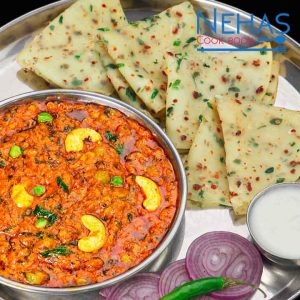
Methi Matar is a quick and easy sabzi made with fresh methi (fenugreek) leaves and green peas, cooked in a rich yet light creamy gravy. This comforting dish is full of flavor and is prepared using simple, easily available ingredients found in every home kitchen. Despite its creamy texture, this sabzi is made without using fresh cream or malai. Instead, I prepare a naturally creamy gravy by grinding peanuts, sesame seeds, and roasted chana dal, which adds both richness and depth of flavor while keeping the dish wholesome and healthy.
Along with this, I also share the recipe for reshmi paratha, which is made using boiled potatoes, all-purpose flour (maida), and basic spices. These parathas are easy to roll, cook evenly, and remain soft for a long time. When served hot with Methi Matar sabzi, they create a perfect and satisfying meal.
With this simple yet flavorful recipe, you can effortlessly recreate a classic restaurant-style Punjabi combo of Methi Matar and reshmi paratha right in the comfort of your home. Do try this!
For methi matar
- Firstly, for this sabzi, I take fresh methi (fenugreek leaves) and green peas in a 2:1 ratio. I sauté the methi leaves separately in a little ghee before adding them to the gravy. This step helps both the methi and peas cook up to 80–90%, reduces bitterness, and also helps retain their beautiful green color in the sabzi.
- Secondly, to achieve a rich and creamy texture in the gravy, I prepare a paste using roasted peanuts, sesame seeds, and roasted chana dal. This paste not only adds natural creaminess and thickness to the curry but also enhances the overall flavor without using fresh cream or malai. However, if you prefer, you can also use fresh malai or cream as an alternative.
- Lastly, methi matar malai tastes best when it is slightly spicy and served hot. It pairs wonderfully with paratha, roti, or even naan.
For Reshmi (Rumali-Style) Paratha
- Firstly, I prepare the paratha dough using maida (all-purpose flour), boiled potatoes, and regular spices. Maida gives a soft texture and enhances the taste of the paratha, but you can also replace it with wheat flour for a healthier option.
- The dough should be medium-soft in consistency. Do not rest the dough, as resting makes it too soft and difficult to roll. Roll the paratha as thin as possible to achieve the reshmi or rumali texture.
- I cook the paratha on a medium-high flame using ghee or butter. Since the paratha is thin, it cooks quickly and takes only about one minute. Finally, reshmi paratha tastes best when served hot, paired with methi matar malai.
Related Recipe Collections
Recipe video
Methi matar sabji recipe | dhaba style methi matar | vatana methi nu shak
Ingredients
For methi matar
- 1 cup green peas
- 2 cup methi leaves
- 2 tbsp roasted peanuts
- 2 tbsp white sesame seeds
- 2 tbsp roasted chana dal
- 1 tbsp watermelon seeds
- 1 tbsp ghee
- 4 tbsp oil
- 1 tsp cumin seeds
- Pinch of hing
- 1 cup chopped onion
- 1 tbsp green chilli-ginger-garlic paste
- Salt to taste
- ½ tsp turmeric powder
- 1 tbsp red chilli powder
- 1 tbsp coriander powder
- 1 tsp kitchen king masala
- 1 cup grated tomatoes
- 1 cup water or as required
- ½ tsp garam masala
- 1 tsp kasoori methi
- 1 tsp lemon juice
- Some coriander leaves
- 2 tbsp fried cashews
For reshmi paratha
- 2 medium size boiled potatoes or 1 cup grated potatoes
- ½ tsp cumin seeds
- 2 chopped green chilli
- Salt to taste
- 1 tsp red chilli flakes
- Some coriander leaves
- 1 cup maida
- 1 tsp oil
- Ghee for roasting paratha
Instructions
Making Methi Matar
- In a mixer jar, add 1 cup green peas, cover with the lid, and coarsely crush them using pulse mode. Keep aside.
- Now, in a mixer jar, add 2 tbsp roasted peanuts, 2 tbsp sesame seeds, 2 tbsp roasted chana dal, 1 tbsp watermelon seeds (majtari seeds), and ½ cup water. Grind into a smooth paste. The white paste is ready; keep it aside.
- Then, in a kadai, add 1 tbsp ghee and 2 cups chopped methi leaves. Sauté until the methi becomes slightly soft. Transfer to a plate and keep aside.
- Now, in a pan, add 4 tbsp oil, 1 tsp cumin seeds, a pinch of hing, and 1 cup chopped onions. Sauté well.
- Then add 1 tbsp green chilli–ginger–garlic paste and sauté.
- Now add the coarsely crushed green peas and salt. Sauté until the green peas become soft.
- Then add ½ tsp turmeric powder, 1 tbsp Kashmiri red chilli powder, 1 tbsp coriander powder, 1 tsp kitchen king masala, and some hot water. Sauté the masala until oil releases from the sides.
- Next, add 1 cup grated tomatoes and sauté the gravy until oil releases from the sides.
- Now add the ground white paste and sauté the gravy on low flame until oil releases and a danedar texture is formed.
- Then add the sautéed methi leaves and mix well.
- Add ½ cup hot water, mix well, cover, and cook the sabzi on low flame until oil releases from the sides.
- Then add ½ tsp garam masala, 1 tsp kasoori methi, 1 tsp sugar, and 1 tsp lemon juice. Mix well.
- Switch off the gas and garnish with chopped coriander leaves and 2 tbsp fried cashews.
- Dhaba-style methi matar is ready. Serve hot with paratha or roti.
Making Reshmi Paratha
- In a mixing bowl, grate 2 medium-sized boiled potatoes. Add ½ tsp cumin seeds, 2 chopped green chillies, salt to taste, 1 tsp red chilli flakes, and some chopped coriander leaves. Mix well.
- Add 1 cup maida gradually and knead into a medium-soft dough. Do not add water while kneading.
- Do not rest the dough. Take a medium-sized dough ball and roll it into a thin paratha.
- Heat a tawa and roast the paratha on medium flame, applying ghee on both sides.
- Reshmi or rumali-style paratha is ready. Serve hot with methi matar.
Notes
- Grind the green peas coarsely using the pulse mode.
- You can use roasted gram flour instead of roasted chana dal.
- The white paste adds creaminess and thickness to the gravy.
- Sauté the methi separately in ghee to retain its green color.
- After adding the white paste, cook the gravy until the oil separates and a danedar texture is formed.
- Grate the boiled potatoes so they merge easily into the dough.
- You can use wheat flour instead of maida, but maida gives better results for parathas.