
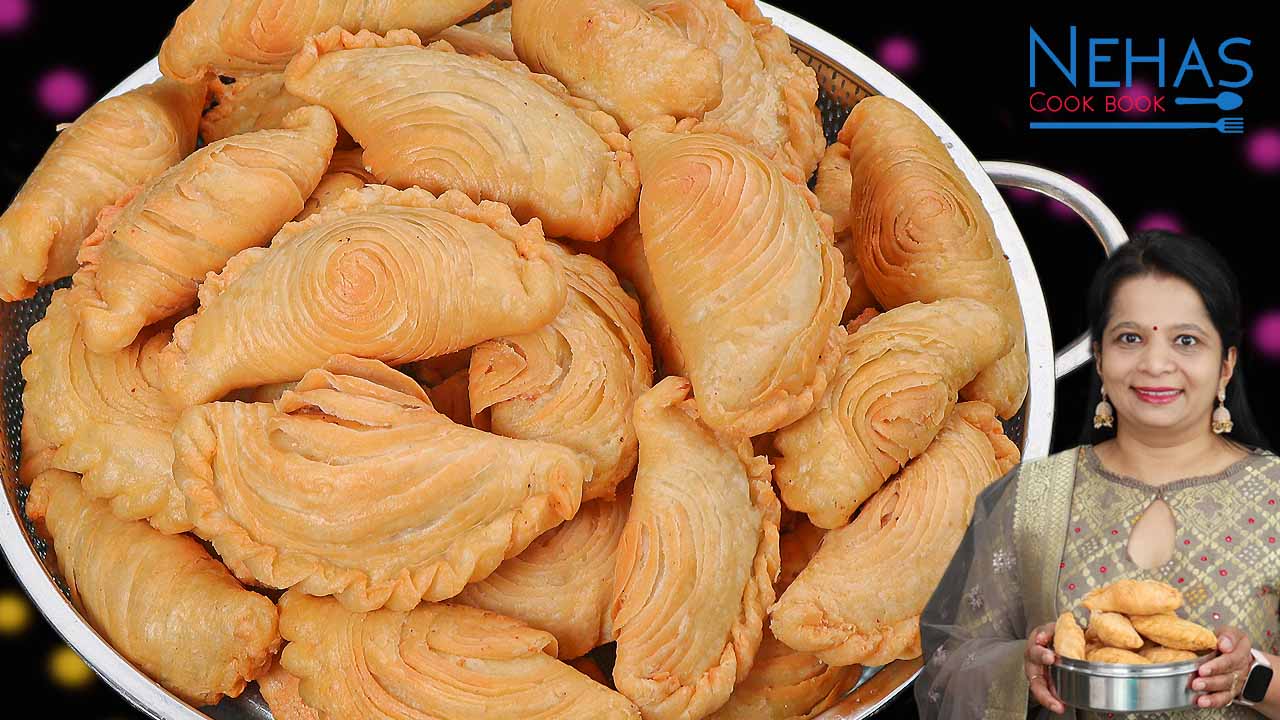

Gujarati meetha Ghughra is an all-time favourite Gujarati sweet made with a crispy, flaky outer layer and a delicious stuffing of rava, mawa, and dry fruits. It is also known as Karanji or Gujiya in different parts of India and is traditionally prepared during the Diwali festival.
In this recipe, I am sharing a special layered version of ghughra with a texture similar to crispy, flaky khari biscuits. The combination of the rich stuffing and the golden, crunchy outer layers makes this sweet truly irresistible. Try this unique layered Meetha Ghughra recipe this festive season and enjoy this traditional homemade sweet with your friends and family!
Tips for Making Perfect layered Meetha Ghughra
- Choice of flour: Traditionally, ghughra is prepared using maida (all-purpose flour), which gives it a crispy and flaky texture. However, you can also use whole wheat flour or a combination of maida and wheat flour according to your preference.
- Prepare a delicious stuffing: For this recipe, I have used a simple and popular combination of roasted rava (semolina), mawa, crushed dry fruits, coconut, and sugar. Instead of mawa you can use roasted besan, which gives binding and enhance taste of rava. You can customize the stuffing by adding your favourite nuts, raisins, cardamom powder, or other ingredients to suit your taste.
- Layering is important: The special layering technique gives these ghughra a beautiful, flaky texture similar to khari biscuits. Make sure to follow the layering steps carefully to achieve crispy and distinct layers after frying.
- Seal the edges properly: Always seal the edges of the ghughra firmly so the stuffing does not come out during frying. You can use a little water to help seal the edges, if needed. Proper sealing also helps the ghughra retain its shape while frying.
- Fry on the right heat: Fry the ghughra over low to medium-low heat until they become golden brown and crispy. Avoid frying them on high heat, as the outer layer may brown quickly while the inner layers remain undercooked.
- Storage and shelf life: These deep-fried sweet treats can generally be stored for up to 15-20 days when prepared, cooled, and stored properly in a clean, dry, airtight container.
Related Recipe Collections
Recipe video
Gujarati meetha ghughra recipe | layered karanji | gujiya recipe
MeethaGhughra is an all-time favourite Gujarati sweet made with a crispy, flaky outerlayer and a delicious stuffing of rava, mawa, and dry fruits.
Ingredients
For outer layered
- 500 grm or 4 cup maida
- ¼ cup melted ghee
- 1.25 cup water or as required
For stuffing
- ½ cup rawa
- ½ cup mawa
- ½ cup ghee
- 3 tbsp cashews
- 3 tbsp almonds
- 3 tbsp pistachio
- ¼ cup desiccated coconut
- 1 tbsp khus-khus
- 1 tsp cardamom powder
- ¼ tsp jayphal powder
- 1 cup powder sugar
For ghee-flour mixture ( sata)
- 2 tbsp ghee
- 2 tbsp cornflour
Other ingredient
- Oil for frying
Instructions
Making Ghughra Stuffing
- In a pan, heat some ghee from the ½ cup of ghee. Add ½ cup rava and roast on low flame until it puffs up and changes colour slightly. Transfer it to a mixing bowl and allow it to cool completely.
- In the same pan, add some more ghee and roast ½ cup mawa until it becomes soft. Transfer it to the mixing bowl.
- Add the remaining ghee to the pan, followed by 3 tbsp cashews, 3 tbsp almonds, and 3 tbsp pistachios. Roast on low flame until the dry fruits become slightly crunchy. Transfer them to a plate and allow them to cool completely. Then, add them to a mixer jar and pulse a few times to crush them coarsely. Transfer the crushed dry fruits to the mixing bowl.
- Add ¼ cup desiccated coconut, 1 tbsp khus-khus (poppy seeds), 1 tsp cardamom powder, ¼ tsp nutmeg powder, and 1 cup powdered sugar to the mixing bowl. Mix everything well.
- The ghughra stuffing is ready. Keep it aside.
Preparing the Outer Layer
- In a mixing bowl, add 500 g maida (all-purpose flour) and ¼ cup ghee. Mix well until the ghee is evenly incorporated into the flour.
- Gradually add water and knead into a tight, smooth dough. Cover the dough and allow it to rest for 15 minutes.
Preparing Layered Ghughra
- Knead the dough for about 1 minute and divide it into equal-sized balls. I divided the dough into 6 equal-sized balls. (Refer to the video for guidance.)
- Roll one dough ball into a medium-thick roti using a rolling pin. Place it on a plate and keep it aside.
- Similarly, roll the remaining dough balls into medium-thick rotis and keep them aside.
- Preparing the sata: In a small bowl, combine cornflour and ghee. Whisk for about 2 minutes until you get a smooth paste. The sata for layered ghughra is ready.
- Place one rolled roti on a clean surface and evenly spread a layer of the cornflour and ghee paste over it.
- Place the second rolled roti on top and spread another layer of the paste. Repeat the process until all the rolled rotis are stacked on top of one another.
- Spread the remaining paste over the top roti.
- Starting from one end, roll the stacked rotis tightly into a log. Gently roll and stretch the log to make it even.
- Cut the log into approximately 1½-inch pieces.
- Take one piece and gently flatten it with your palm.
- Roll it out into a medium-sized puri using a rolling pin. Do not roll it too thin.
- Place about 2 tsp of the prepared stuffing in the centre of the puri.
- Lightly moisten the edges with water. Fold the puri over the stuffing and press the edges together firmly to seal it.
- Hold the ghughra in your hand and pinch the sealed edges between your fingers to create pleats and give it a traditional ghughra design. Alternatively, you can use a ghughra mould, cutter, or fork to create a decorative pattern.
- Repeat the process with the remaining dough pieces and stuffing.
Frying Ghughra
- Heat oil in a deep pan over medium heat. Once the oil is hot, reduce the flame to low.
- Carefully add 4–5 ghughra to the hot oil, depending on the size of your pan. Fry them on low flame until they turn light golden brown. Each batch may take approximately 10–12 minutes to fry evenly.
- Once the ghughra are cooked and crisp, remove them from the oil and place them on a wire rack or a plate lined with a paper towel to drain the excess oil.
- Allow the ghughra to cool completely before storing them in an airtight container. This will help maintain their crispiness for longer.
Notes
- Roast the rava on low heat until it changes color.
- Mawa enhances the taste of the stuffing. You can use ¼ cup of roasted besan instead.
- Grind the dry fruits using the pulse mode to prevent the oil from releasing.
- Add the sugar only after the mixture has cooled completely.
- If the flour mixture holds its shape when pressed between your palms, it means the ghee is sufficient and well incorporated.
- Make a medium-soft, smooth dough. Do not make the dough too soft.
- Mixing cornflour with ghee gives better results and helps create distinct layers.
- Apply a thin layer of the ghee-flour mixture to the rolled roti.
- Start rolling with your hands gently without applying too much pressure.
- Roll the puri to medium thickness. Handle it gently; otherwise, the layers may not separate properly.
- Seal the ghughra properly using water.
- Fry the ghughra over medium-low heat
Subscribe to our Youtube ChannelClick here to subscribe our Youtube Channel and stay updated with our latest video recipes